
Unlock growth with an effective independent advisor social media strategy for 2026. Engage clients and enhance your professional brand today!
Independent Advisor Social Media Strategy for 2026
An independent advisor social media strategy is the process of using digital platforms with targeted, compliant content and consistent engagement to grow your client base and professional brand. Most advisors underestimate how much this differs from general business marketing. Financial services carry SEC and FINRA compliance requirements that shape every post, comment, and shared article. Get the structure right, and social media becomes a lead generation engine that works while you sleep. Get it wrong, and you face regulatory exposure and wasted effort. The advisors who win on social media in 2026 treat it as a long-term relationship tool, not a shortcut to sales.
What is an independent advisor social media strategy?
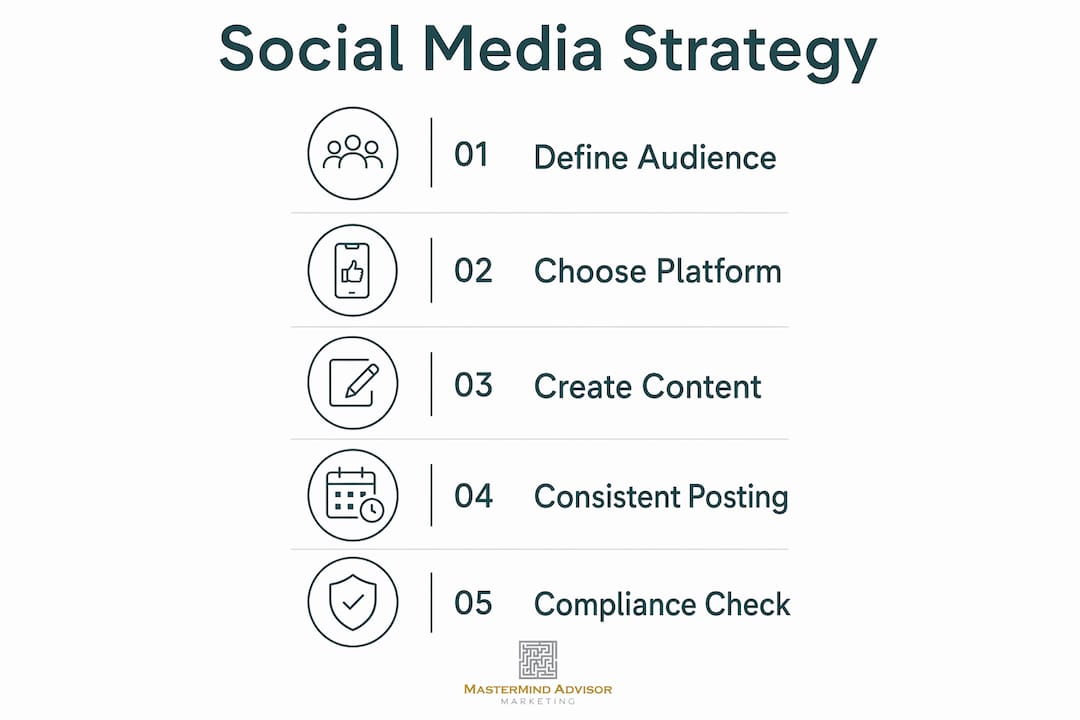
A social media strategy for independent advisors is a documented plan that defines your audience, platform focus, content themes, posting schedule, and compliance workflow. It is not a collection of random posts. The industry term for this planning framework is a "social media marketing program," and FINRA expects advisors to have one in writing. Without a defined program, you cannot demonstrate supervisory control, and you cannot measure what is working.
The core benefit of a structured program is trust at scale. Social media lets you reach hundreds of prospects with one piece of educational content. That content does the pre-selling before a prospect ever books a call. Pre-vetted inbound leads arrive already familiar with your philosophy, which shortens the sales cycle and improves conversion quality.

Compliance is not optional, and it is not as difficult as most advisors fear. Social media compliance in 2026 requires pre-approval of static content, fair and balanced communication, and record retention for at least three years. Build those requirements into your workflow from day one, and they become routine rather than burdensome.
How do you identify your audience and pick the right platform?
Niche clarity is the single biggest differentiator in advisor marketing strategies. Advisors who try to speak to everyone end up resonating with no one. Define your ideal client by age, occupation, financial situation, and the specific problem you solve. A specialist in retirement income planning for federal employees will attract a very different audience than an advisor focused on equity compensation for tech executives.
Platform choice follows audience demographics directly. Each platform serves a different purpose:
- LinkedIn is the primary platform for most independent advisors. It reaches professionals, allows long-form thought leadership, and has the highest concentration of high-net-worth prospects actively seeking financial guidance.
- YouTube works best for advisors willing to produce weekly educational videos. Video builds trust faster than text, and a well-optimized YouTube channel generates search traffic for years.
- Twitter/X suits advisors who can comment on market events quickly and consistently. Daily engagement is the norm, and the audience skews toward financially literate professionals.
- Instagram and TikTok work for advisors targeting younger demographics or those building a personal brand around lifestyle and financial wellness content.
Pro Tip: Pick one primary platform and commit to it for at least 12 months before adding a second. Spreading across five platforms with thin content produces worse results than owning one platform with consistent, high-quality posts.
Avoiding platform overload is one of the most practical social media tips for advisors. Burnout from managing too many channels is the number-one reason advisors abandon their social media programs entirely.
How do you create content that builds trust without overselling?
Content pillars are the foundation of effective social media for financial advisors. A content pillar is a recurring theme that guides what you post. Three core content pillars work consistently well for advisors: educational content, behind-the-scenes content, and compliant client stories.
- Educational content answers the questions your clients ask most often. Think "How does a Roth conversion work?" or "What happens to my 401(k) if I change jobs?" These posts position you as the expert before a prospect ever contacts you.
- Behind-the-scenes content shows your process, your team, and your values. It humanizes your practice and builds the personal connection that financial advice requires.
- Compliant client stories share outcomes and experiences without making specific performance claims. These require careful review under FINRA rules, but testimonial guidelines from the 2022 SEC Marketing Rule update allow properly disclosed endorsements.
Pro Tip: Build a library of pre-approved content templates for each pillar. Once compliance approves a template format, you can repurpose it across platforms and topics without triggering a full review each time.
Pre-approved templates enable repurposing without repeated compliance delays. That efficiency is what separates advisors who post consistently from those who go silent for weeks waiting for approvals.
Social media is not a digital billboard. Advisors who treat every post as a sales pitch see engagement collapse quickly. The goal is to answer client questions simply and build trust before any sales conversation begins. Lead magnets such as educational guides and webinars convert audience interest into contacts within a compliant framework.
What does a consistent posting and engagement routine look like?
Consistency is the variable that separates advisors who generate leads from those who do not. Posting 3–5 times per week on LinkedIn, publishing one video per week on YouTube, and engaging daily on Twitter/X are the frequency benchmarks that produce meaningful inbound lead flow. Consistency over 12 months is the main success factor, not any single viral post.
A practical weekly routine looks like this:
- Batch content creation. Set aside two to three hours once per week to write, record, or design your posts for the coming week. Batching prevents the daily scramble that leads to skipped posting days.
- Schedule posts in advance. Use a scheduling tool to queue content during peak engagement windows. For LinkedIn, Tuesday through Thursday mornings tend to perform well.
- Respond to every comment within 24 hours. Comments signal algorithmic relevance and show prospects that you are accessible. A one-sentence reply is enough.
- Proactively engage with your target audience. Spend 10–15 minutes per day commenting on posts from your ideal clients, referral partners, and local business leaders. This outreach builds visibility without paid advertising.
- Archive every post and interaction. Compliance requires records, and manual archiving is error-prone. Use a tool that captures post history, edits, and engagement data automatically.
Pro Tip: Treat your social media calendar the same way you treat client meeting prep. Block the time, show up prepared, and do not cancel. Advisors who skip posting "just this week" rarely recover their momentum.
Video content is the highest-trust format available to advisors. A two-minute answer to a common retirement question builds more credibility than ten text posts on the same topic.
How do you navigate compliance requirements for social media in 2026?
Compliance is the area where most independent advisors either over-complicate or ignore their obligations. The 2025 SEC Marketing Rule Risk Alert shifted regulatory scrutiny toward practical implementation. Examiners now look for documented audit trails and active supervision evidence, not just written policies sitting in a drawer.
Three compliance pillars govern social media activity for registered advisors:
| Compliance Pillar | Requirement | What Examiners Check |
|---|---|---|
| Pre-approval of static content | Principal must review and approve before posting | Sign-off documentation with date and reviewer name |
| Fair and balanced communication | No misleading claims, cherry-picked results, or unsubstantiated performance | Post content and any linked materials |
| Recordkeeping | Retain all posts, edits, and interactions for at least three years | Platform logs, metadata, and archived copies |
Static content includes profile pages, articles, and pre-written posts. Interactive content, such as comments and direct messages, requires ongoing supervision rather than pre-approval. That distinction matters because it affects how you structure your review workflow.
SEC Marketing Rule examiners now expect metadata, platform logs, and sign-off documentation on social posts. A spreadsheet is not sufficient. Structured workflows with role permissions, approval queues, and automatic archiving meet the standard. The ADV marketing compliance framework provides additional guidance on operationalizing these requirements for digital content.
Building trust online requires that your compliance process is invisible to the client. Prospects should see polished, helpful content. The review workflow behind it is your operational concern, not theirs.
How do you measure social media success as an advisor?
Measuring social media performance requires tracking the right indicators, not just vanity metrics. Follower count tells you almost nothing about lead quality. The metrics that matter for advisors are:
- Lead source tracking. Ask every new prospect how they found you. Tag social media as a source in your CRM so you can calculate actual return on your time investment.
- Engagement quality. Comments and direct messages from your target demographic signal that your content is reaching the right people. Likes from random accounts do not.
- Profile visits and connection requests. On LinkedIn, these indicate that your content prompted someone to investigate you further. That is a warm signal.
- Content performance by pillar. Track which content themes generate the most meaningful engagement. Double down on what works and cut what does not.
Social proof strategies such as client endorsements and shared testimonials can increase engagement significantly when executed within compliance guidelines. Review your content performance monthly and run simple A/B tests on post formats, headlines, and calls to action. Virality is not the goal. Consistent, compounding visibility with your specific target audience is.
Key Takeaways
An independent advisor social media strategy works when it combines platform focus, pre-approved content pillars, and documented compliance workflows executed consistently over at least 12 months.
| Point | Details |
|---|---|
| Choose one primary platform | Focus on LinkedIn or YouTube first; add platforms only after 12 months of consistent posting. |
| Build three content pillars | Use educational, behind-the-scenes, and compliant client story formats to maintain variety and compliance. |
| Operationalize compliance | Document pre-approvals, archive all posts, and maintain records for at least three years. |
| Engage daily, not just post | Reply to comments and proactively connect with ideal clients to build real relationships. |
| Measure lead source, not followers | Track which social activity converts to prospect conversations using CRM tagging. |
What I have learned from watching advisors build social media presence
Most advisors I have worked with start their social media program with the same mistake: they try to be everywhere at once. They post on LinkedIn, record YouTube videos, share on Instagram, and comment on Twitter/X, all in the first month. By month three, they have burned out and abandoned everything. The advisors who build real practices through social media do the opposite. They pick one platform, post consistently, and stay patient.
The second mistake is treating social media like a broadcast channel. Every post is a pitch, every caption ends with "DM me to learn more," and every article is a thinly disguised advertisement. Prospects see through it immediately. The advisors who generate the best leads are the ones who answer real questions without asking for anything in return. That generosity compounds into trust, and trust converts into clients.
Compliance is manageable. I have seen advisors treat it as a reason to avoid social media entirely, which is a missed opportunity. A simple pre-approval workflow and a reliable archiving tool handle 90% of the regulatory burden. The remaining 10% is judgment, and that gets easier with practice.
The honest truth is that social media rewards patience in a way that most marketing channels do not. A prospect who has read 40 of your posts over six months arrives at a first call already convinced. That is a different conversation than a cold outreach, and it is worth the wait.
— Josh
How Mastermindadvisormarketing supports your social media growth
Building a compliant, consistent social media presence takes more than good intentions. It takes a system.
Mastermindadvisormarketing is built specifically for independent financial advisors who want to grow their practice without building a marketing department from scratch. The platform provides customized content strategies, pre-approved templates, automated email follow-ups, and CRM integration that ties social media activity directly to lead tracking. Advisors using Mastermindadvisormarketing report stronger client engagement and more consistent lead flow without the compliance guesswork. If you are ready to build a social media program that actually produces results, visit Mastermind Advisor to see how the system works.
FAQ
What platforms work best for independent financial advisors?
LinkedIn is the most effective platform for most independent advisors because it reaches professionals and high-net-worth prospects directly. YouTube is the best second platform for advisors willing to produce weekly educational videos.
How often should an advisor post on social media?
Posting 3–5 times per week on LinkedIn and once per week on YouTube produces consistent inbound lead flow. Daily engagement on Twitter/X is the standard for advisors active on that platform.
What compliance records do advisors need to keep for social media?
FINRA and SEC rules require advisors to retain all social media posts, edits, and interactions for at least three years. Static content must receive principal pre-approval before posting.
How do advisors generate leads from social media without making sales pitches?
Educational content and lead magnets such as guides and webinars convert audience interest into contacts without aggressive selling. Answering common client questions builds trust that leads to inbound inquiries over time.
How long does it take for social media to produce results for an advisor?
Consistent posting for at least 12 months is the standard timeline for meaningful inbound lead generation. Advisors who sustain quality content over that period build a library of pre-vetted prospects who arrive at first calls already familiar with their approach.
Recommended
Originally published at source.