
28 Day Webinar Promotion Timeline for Marketing Teams: 2026 Benchmarks
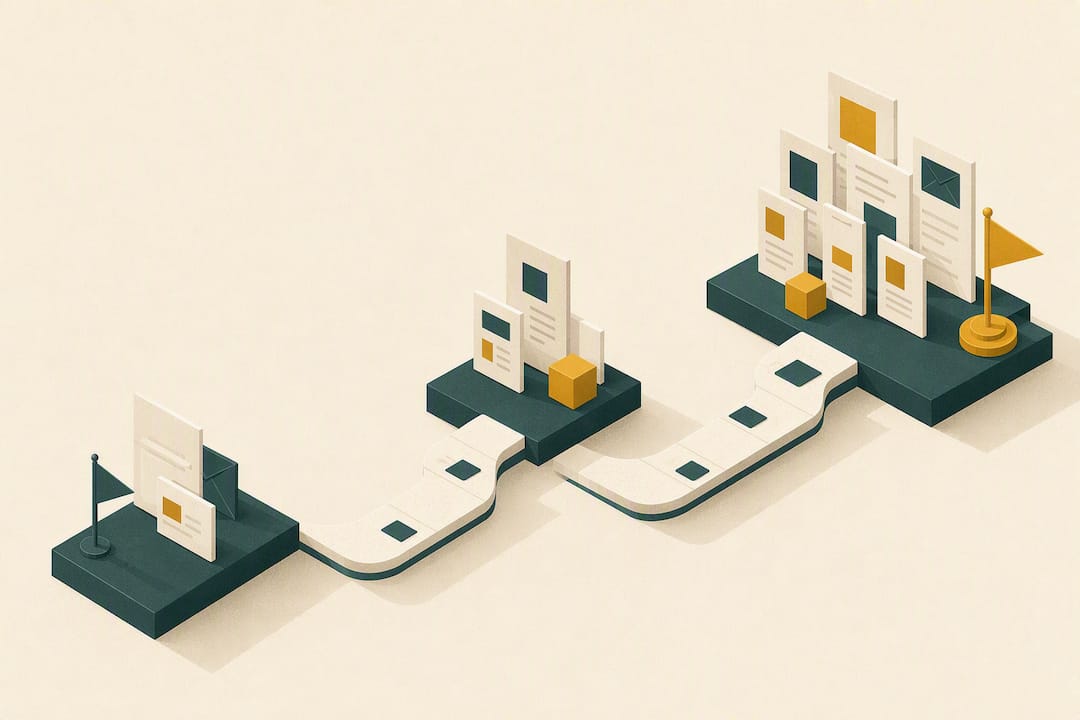
Copy and paste 28 day webinar timeline for marketing teams with 2026 benchmarks, a data backed email cadence, and advisor compliance tips.
28 Day Webinar Promotion Timeline for Marketing Teams: 2026 Benchmarks
Start promoting most webinars about 28 days before the session and concentrate the majority of your effort in the final 7 to 14 days. Email drives most registrations, so build your calendar around a disciplined send schedule, not scattered social posts. Expect the biggest registration spike right before the event, which means your final week needs urgency messaging and retargeting ready to go, not an afterthought.
TL;DR:
- Promotions should begin 28 days before the webinar, with a focus on early awareness and a concentrated push in the last two weeks.
- Co-marketing partnerships and LinkedIn paid content can boost registration numbers by 30 to 50 percent during the main push phase.
- Nearly half of all registrations happen in the last week, so increasing email frequency and urgency messaging then significantly impacts attendance.
- Automated, tailored follow-up and repurposing of webinar content extend lead generation and improve conversion beyond the live event.
Table of Contents
- What Does a 28-Day Webinar Promotion Timeline Look Like?
- What Email Sequence and Timing Actually Convert?
- Which Channels and Paid Tactics Should You Prioritize?
- How Do You Turn the Webinar Into an Always-On Lead Engine?
- What Attendance and Conversion Numbers Should You Expect?
- How a Turnkey System Maps This Timeline for Advisor Webinars
- Why a Calendar-First Approach Beats Ad-Hoc Promotion
- Let Mastermind Advisor Marketing Run Your Webinar Calendar
- Sources
- FAQ
What Does a 28-Day Webinar Promotion Timeline Look Like?
A promotional timeline for webinars is just a scheduled sequence of tasks and messages, mapped to specific days, that moves a prospect from "never heard of this" to "registered and showed up." Most B2B marketing teams treat 28 days as the sweet spot: long enough to build genuine awareness, short enough that momentum doesn't fizzle. A 28-day promotion window with a concentrated final-week push produces measurably better registration numbers than a slower, more evenly spread campaign.
Break the 28 days into three phases, each with a different job.
Days 28 to 14: build the foundation
This phase is unglamorous but skippable at your own risk. Nail it now and everything downstream gets easier.
- Lock the topic, title, and one clear promise the webinar delivers.
- Publish the landing page with a short form and a specific, benefit-driven headline.
- Build the confirmation email with a calendar invite attached (ICS file, not just a "we'll remind you" line).
- Brief speakers and co-marketing partners on talking points, target dates, and their promotional responsibilities.
- Draft your full email sequence and social copy now, so the final two weeks are execution, not writing.
Early awareness matters more than most planners assume. Getting the announcement out in this window rather than delaying it can lift total registrations by roughly 12 percent, according to RevNew's 2026 promotion benchmarks. Skipping straight to a "two-week sprint" costs you that early lift permanently. You can't retroactively announce something three weeks in advance.
Days 14 to 7: the main push
This is when the campaign becomes visible to your full audience, not just your warmest list.
- Send the main invite email to your full segmented list.
- Launch paid LinkedIn sponsored content targeting your ideal registrant profile.
- Run organic social posts with varied angles: one framed as a problem statement, one as a speaker credibility post, one as a data teaser from the presentation.
- Activate co-marketing partners to send to their own lists or post on their channels.
- Start building your retargeting audience from landing page visitors who haven't converted yet.
Partnerships are worth the coordination overhead here. Co-marketing pushes can add 30 to 50 percent more registrations than solo promotion, which is a bigger lever than most teams give it credit for.
The final 7 days: where most registrations happen
Roughly 49 percent of all registrations arrive in the last seven days before a webinar. If your final week looks the same as week two, you're leaving registrations on the table.
- Increase email frequency: a "last chance" send, then a day-before reminder.
- Post daily social micro-content: countdown graphics, a speaker quote, a poll tied to the topic.
- Retarget everyone who visited the landing page but didn't register, with ad copy that references urgency directly ("starts Thursday").
- Don't dismiss same-day sign-ups. Plenty of registrants decide the morning of the event, so keep registration open and promoted right up to start time.
Day-of and immediately after
Day-of execution is where good campaigns lose attendees they already earned. Send a reminder one hour before start time and another 5 to 15 minutes before, run a quick host tech check (audio, screen share, backup internet), and have a live engagement prompt ready for the first two minutes so early joiners aren't staring at a loading screen. The moment the session ends, send the replay email, segment your list into attendees versus no-shows, and start your repurposing schedule that same day rather than "sometime next week."
What Email Sequence and Timing Actually Convert?
Email drives between 57 and 71 percent of webinar registrations, which makes it the highest-leverage channel in this entire timeline by a wide margin. Get the email sequence right and everything else becomes a supporting act.
Here's a sequence you can adapt directly into your email service provider:
| Timing | Purpose | |
|---|---|---|
| Save the date | 28 days out | Build early awareness, no hard CTA needed |
| Invite 1 | 28 days out | Full pitch with topic, speaker, and registration link |
| Invite 2 | 7 days out | Reinforce value, add a testimonial or preview stat |
| Last chance | 2 days out | Urgency framing, single CTA, shorter copy |
| Day-of reminder | Morning of the event | Confirm time zone, join link front and center |
| Reminder 1 | 2 hours before | Short nudge, join link only |
| Reminder 2 | 15 to 60 minutes before | Final nudge for last-minute joiners |
Tuesday and Thursday mornings between 9 and 11 AM consistently outperform other send windows for opens and registration decisions. If your audience spans multiple time zones, consider splitting sends so West Coast recipients don't get a 6 AM email.
Reminder copy should stay under 100 words with one CTA and a visible join link, nothing else. Sequences with two or three reminders reliably beat a single reminder on show-up rate, based on platform benchmark data.
Pro Tip: Personalized CTAs, tied to the recipient's role or a specific pain point rather than a generic "Register Now," can more than double conversion compared to one-size-fits-all copy. If you segment your list, write at least two CTA variants.
Which Channels and Paid Tactics Should You Prioritize?
Email and LinkedIn carry the weight for most B2B webinar campaigns, and everything else supports those two. LinkedIn works because your audience is already there in a professional mindset, and organic posts paired with paid sponsored content create the repetition that turns "I saw that" into "I registered."
A workable channel sequence looks like this:
- Post organically on LinkedIn 3 to 4 times across the 28-day window, rotating between a problem statement, a speaker spotlight, and a data preview.
- Start paid LinkedIn sponsored content about 2 to 3 weeks before the event, once your landing page and creative are finalized.
- Layer in retargeting ads aimed specifically at people who visited the registration page but didn't convert. This audience converts at a much higher rate than cold traffic.
- Give speakers a short amplification checklist: one pre-written LinkedIn post, one email blurb for their own network, and a headshot-ready graphic they can share without extra design work.
- Lean on partners for co-marketing sends during the days 14 to 7 window, when reach matters most.
In the final week, swap static graphics for short video clips, quote cards pulled from past sessions, and countdown visuals. Static images blend into a feed; a 15-second clip of the speaker teasing one insight tends to stop the scroll. If CTA copy is a weak point for your team, testing frameworks for higher-converting CTAs can sharpen both your ad copy and your landing page messaging.
How Do You Turn the Webinar Into an Always-On Lead Engine?
The live session is the beginning of the asset's life, not the end of it. Send the replay email within hours, not days, to both attendees (with a "here's what you missed" recap) and no-shows (with a stronger CTA, since they already raised their hand once by registering).
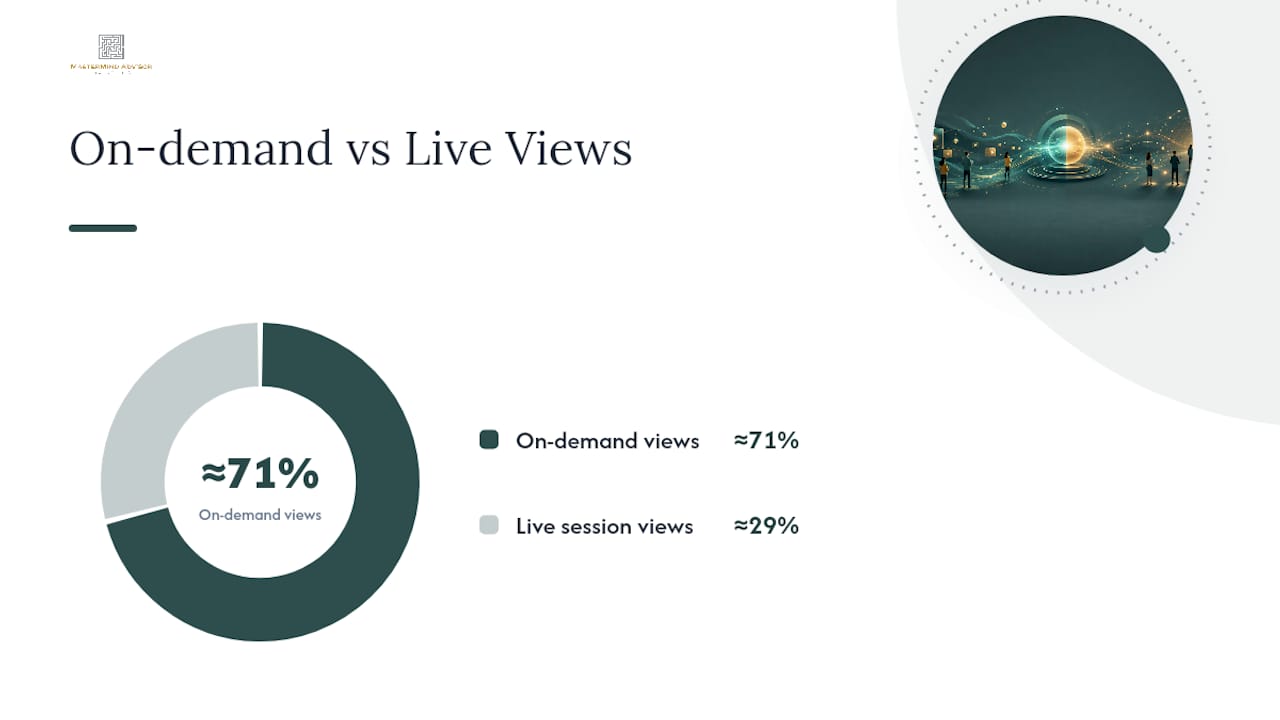
Simulated-live automation is worth setting up if you run webinars regularly. It republishes your recorded session on a recurring schedule with the look and feel of a live event, capturing registrations around the clock. Automated and personalized webinar distribution is one of the clearer drivers of improved conversion heading into 2026, mainly because it keeps a single production effort generating leads for months instead of one afternoon.
From there, repurpose aggressively:
- Cut 3 to 5 short clips highlighting the most quotable or data-heavy moments.
- Pull audience questions into a follow-up blog post with the full video embedded and timestamped.
- Turn a strong stat or quote into a standalone social graphic.
- Track replay views and tag which leads came from the live session versus the on-demand version, so attribution doesn't get muddy.
Repurposing isn't optional polish. On-demand distribution alone can generate roughly 2.4 times the total views of the live session.
What Attendance and Conversion Numbers Should You Expect?
Live attendance rates typically land around 41 to 49 percent of registrants, so a webinar with 400 registrants realistically brings 160 to 200 live attendees. Factor that into your forecast now, not the day after the event when the number looks disappointing without context.
Registration timing skews late: expect the bulk of sign-ups in the final 7 to 14 days, with a real spike on the day of the event itself. Don't panic if your registration count looks flat two weeks out.
The number that should worry you more than raw registrations is attended-to-lead conversion. A campaign that pulls 300 registrants and converts 15 percent of attendees to qualified leads outperforms one that pulls 600 registrants and converts 5 percent. Optimize the follow-up sequence, not just the top of the funnel.
How a Turnkey System Maps This Timeline for Advisor Webinars
Financial advisors face a version of this timeline with extra friction: compliance review windows, longer buying cycles, and prospects who need more nurturing before they'll book a call. A managed system built for advisors takes the generic 28-day framework and pre-builds the pieces that usually eat the most time.
That typically means:
- A compliance-reviewed landing page and email sequence ready to schedule, not written from scratch each time.
- Automated follow-up drips that route attendees and no-shows into different nurture paths based on engagement.
- A repurposing plan that turns one seminar or webinar into weeks of compliant social and email content.
- CRM integration so lead scoring and follow-up timing don't depend on someone remembering to check a spreadsheet.
Advisors running this kind of program alongside ready-to-use follow-up email templates tend to close the gap between "we hosted a webinar" and "we booked meetings" much faster than teams building each piece manually.
Why a Calendar-First Approach Beats Ad-Hoc Promotion
Most webinar campaigns fail quietly. Not from bad content, but from promotion that starts too late and peaks too early, leaving nothing for the week that actually delivers registrations. A calendar forces you to protect that final week's intensity while still banking the early-awareness lift you'd otherwise skip.
The harder trade-off is registration count versus lead quality. Chasing volume with broad, low-friction promotion inflates your registrant number and deflates your show-up and conversion rates. Segment early, personalize your CTAs, and accept a smaller list that actually attends and buys.
If you take one thing from this: build the calendar before you write a single email. Execution gets easy once the schedule exists.
— Josh
Let Mastermind Advisor Marketing Run Your Webinar Calendar
A professionally managed marketing system is an alternative to piecing this timeline together in-house with a marketing generalist and a hope that compliance signs off in time. Its system is built by people who've run advisory practices themselves, which means the webinar and seminar production already accounts for the review cycles, disclosures, and buyer hesitation unique to financial services, not a generic B2B playbook retrofitted for advisors.
Such services often handle parts of this timeline that consume the most hours: the landing page, the full email cadence, automated follow-up drips tied into a CRM, and a repurposing plan that keeps the webinar generating leads long after the live session ends. This kind of system may fit independent advisors and small advisory firms well, especially if they lack a dedicated marketing hire who can manage all 28 days of the calendar on top of client work.
If you want a deeper walk-through before committing, the seminar hosting resource covers execution details this article didn't have room for. When you're ready to put a program in place, start a growth strategy conversation and get your next webinar mapped to an actual calendar instead of a to-do list.
Sources
- Webinar statistics 2026: attendance & conversion data | Digital Applied
- Failproof Webinar Promotion Strategies 2026 | RevNew
- Webinar statistics | Zoom
- Are webinars still effective in 2026? | WebinarKit
FAQ
Are Webinars Still Effective in 2026?
Yes. Automated and personalized distribution has made webinars more effective, not less, by letting one recorded session keep generating leads through simulated-live replays long after the original date.
How Far in Advance Should I Promote a Webinar?
Start about 28 days out, with light awareness building early and the heaviest promotional push in the final 7 to 14 days, when roughly 49 percent of registrations typically occur.
What Is the Best Way to Promote a Webinar?
Lead with email, since it drives 57 to 71 percent of registrations, and support it with LinkedIn organic and paid content plus partner co-marketing during the middle two weeks. For advisors, a managed system like Mastermind Advisor Marketing handles this sequencing along with the compliance review most generic marketing tools skip.
What Is a Promotional Timeline for a Webinar?
A promotional timeline is a phased schedule of tasks and messages, tied to specific days before and after the event, that sequences awareness, main-push, and final-week urgency activities so registrations build rather than stall.
How Many Reminder Emails Should I Send Before a Webinar?
Two to three reminders, typically the day before, one hour before, and a final nudge 15 to 60 minutes before start time, since multiple reminders measurably increase attendance compared to a single send.
Recommended
Originally published at source.